|
The Plough Boy Anthology:Pitcairn's Island:Transcriptions of selected publications
| |||||||||||||||||||||||||||||||||||||||||||||||||||||||||||||||||||||||||||||||||||||||||||||||||||||||||||||||||||||||||||||||||||||||||||||||||||||||||||||||||||||||||||||||||||||||||||||||||||||||||||||||||||||||||||||||||||||||||||||||||||||||||||||||||||||||||||||||||||||||||||||||||||||||||||||||||||||||||||||||||||||||||||||||||||||||||||||||||||||||||||||||||||||||||||||||||||||||||||||||||||||||||||||||||||||||||||||||||||||||||||||||||||||||||||||||||||||||||||||||||||||||||||||||||||||||||||||||||||||||||||||||||||||||||||||||||||||||||||||||||||||||||||||||||||||||||||||||||||||||||||||||||||||||||||||||||||||||||||||||||||||||||||||||||||||||||||||||||||||||||||||||||||||||||||||||||||||||||||||||||||||||||||||||||||||||||||||||||||||||||||||||||||||||||||||||||||||||||||||||||||||||||||||||||||||||||||||||||||||||||||||||||||||||||||||||||||||||||||||||||||||||||||||||||||||||||||||||||||||||||||||||||||||||||||||||||||||||||||||||||||||||||||||||||||||||||||||||||||||||
|
Navigation Note
Publications are listed by date of events when possible. Otherwise they are listed by date of publication. Note that many publications have no personal authors.
Tom Tyler,
Denver, Aug 6, 2025 |
| 1760 | 1810 | 1840 | 1870 | 1900 | 1930 | 1960 |
| 1790 | 1820 | 1850 | 1880 | 1910 | 1940 | |
| 1800 | 1830 | 1860 | 1890 | 1920 | 1950 |
James Galloway's Fateful Voyage (Bounty mutiny).
James Galloway's Pitcairn Early History.
John Hagan's Bounty Chronicles (with many images).
|
1767 - Discovery of Pitcairn's Island. An Account of the Voyages Undertaken by the Order of His Present Majesty for Making Discoveries in the Southern Hemisphere .... London: Strahan and Cadell, 1773 | |
|
The account of the disovery and naming of Pitcairn's Island during the voyage of Captain Carteret, July 2, 1767. | ||

|
1790 - Bligh's Narrative of the Mutiny on the Bounty A Narrative of the Mutiny, on Board His Majesty's Ship Bounty; and the Subsequent Voyage of Part of the Crew, in the Ship's Boat, From Tofoa, one of the Friendly Islands, To Timor, a Dutch Settlement in the East Indies. London: George Nicol, 1790 | |
|
The first published account of the mutiny on the Bounty written by ships commander. | ||
|
Bligh's Voyage to the South Sea. A voyage to the South sea, undertaken by command of His Majesty, for the purpose of conveying the bread-fruit tree to the West Indies, in His Majesty's ship the Bounty, commanded by Lieutenant William Bligh. Including an account of the mutiny on board the said ship, and the subsequent voyage of part of the crew, in the ship's boat, from Tofoa, one of the Friendly islands, to Timor, a Dutch settlement in the East Indies. The whole illustrated with charts, &c. London, Printed for G. Nicol, 1792. | |
|
William Bligh's complete account of the voyage of the Bounty until the mutiny; his account of the mutiny; an account of the open-boat voyage from Tofoa to Timor and subsequent arrival in England. | ||
|
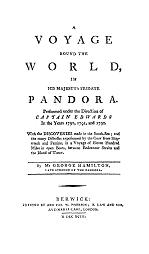
1793 Hamilton - Voyage of HMS Pandora A Voyage Round the World in His Majesty's Frigate Pandora Performed under the Direction of Captain Edwards in the Years 1790, 1791, and 1792. Berwick: W. Phorson, 1793 | |
|
Account of the voyage of H.M.S. Pandora which was sent to the South Seas to find and apprehend the mutineers of the Bounty and to bring them back to England. | ||
|
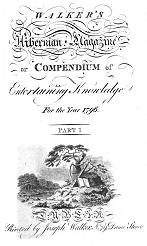
1794 & 1795 - Adventures of the Mutineers. "Authentic and Interesting Narrative of the Adventures of the Mutineers, who piratically seized his Majesty's Ship Bounty, under the Command of Captain Bligh, and were pursued by order of Government, by the Pandora Frigate, under the Command of Captain Edwards. Including a particular Detail of their singular Projects, and various Disagreements, Embarrassments, Escapes, Stratagems &c. in the Island of Otaheite." Walker's Hibernian Magazine or, Compendium of Entertaining Knowledge, Oct., Nov., Dec. 1794 & Jan. 1795. | |
|
A less than factual account of the life of the Bounty mutineers on the island of Tahiti before they were apprehended by Captain Edwards of the Pandora. | ||
|
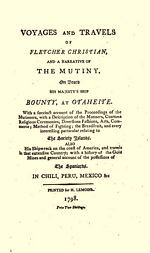
1796 - Voyages & Traavels of Fletcher Christian [Fletcher Christian.] Voyages and travels of Fletcher Christian, and a narrative of the mutiny, on board His Majesty's ship Bounty, at Otaheite. With a succinct account of the Proceedings of the Mutineers, with a Description of the Manners, Customs Religious Ceremonies, Diversions Fashions, Arts, Commerce; Method of Fighting; the Breadfruit, and every interesting particular relating to The Society Islands. Also His Shipwreck on the coast of America, and travels in that extensive Country; with a history of the Gold Mines and general account of the possessions of The Spaniards. In Chili, Peru, Mexico &c. [London]: Printed for H. Lemoine, [1798] [9], 6-188p., plate; 8°. Full text via images. | |
|
The made-up letters of a fictitious Fletcher Christian telling of his adventures after the Mutiny. This was published before the discovery of the mutineer colony on Pitcairn's Island in 1808. | ||

|
February 1, 1808 - Captain Mayhew Folger of the Topaz discovers the descendants to the Bounty mutineers. "In Captain Folger's Log Book:: A Thrilling Bit of Pitcairn Island History Recorded There." Dallas Morning News, April 10, 1897, p.6. | |
|
Transcription from Captain Mayhew Folger's Topaz Logbook. Contemporary accounts in both England and the United States were from different sources. | ||
|
Extract from Capt. Mayhew Folger's journal about the discovery of the mutineers' settlement on Pitcairn's Island A newspaper article transcribed from: The Lincoln, Rutland and Stamford Mercury (Stamford, England), Friday, May 19, 1809; pg. 2; Issue 4078. (British Library Newspapers, Part IV: 1732-1950.) | |
|
The first account of the discovery of the mutineers' settlement on Pitcairn's Island taken from the journal of Captain Mayhew Folger, of the Boston ship Topaz by Lieutenant William Fitzmaurice, Valparaiso, Oct 10, 1808. | ||
|
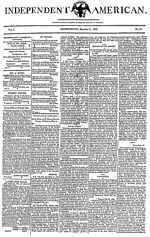
Mayhew Folger's 1808 Discovery of the Settlement on Pitcairn's Island as it First Appeared in the American Press: Late 1809-Early 1810 This transcription was taken from the following newspaper article: "Mutiny of the Bounty", Independent American (Georgetown, District of Columbia), November 9, 1809, page [1]. Readex: America's Historical Newspapers. Web. 30 Nov. 2016. | |
|
The "Extract of a letter from Buenos Ayres, to a merchant in Cork, dated June 19, 1809" was reproduced in many American newspapers in late 1809 and early 1810. For some reason the press in the United States did not pick up and reproduce the transcription of parts of Captain Folger's journal which were sent to the admiralty in London and reproduced widely in Britian as well as in Australia and India. | ||
|
September 1828 - Captain Mayhew Folger dies in Ohio. "Deaths" Salem Gazette Salem, Massachusetts, October 3, 1828, p.3. | |
|
Captain Mayhew Folger, of the Topaz, who discovered the mutineers' colony on Pitcairn's Island in 1808, dies in Ohio. | ||
|
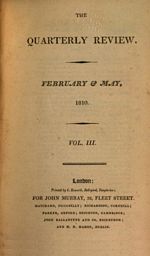
Selection from a review of Voyage de Dentrecasteaux, envoye a la Recherche de la Perouse, publie par Ordre de Sa Majeste l’Empereur et Roi, sous le Ministere de S. E. le Vice-Amiral Decres, Comte de l’ Empire. Redige par M. de Rossel, Ancien Capitaine de Vaisseau. 2 Tom. avec un Atlas. a Paris, 1808. "" Attributed to John Barrow. Quarterly Review, Vol. 3, No. 5 (Feb. 1810), pp. 23-24. | |
|
The first apparent acknowledgement by the Admiralty of the American discovery of the colony of descendants of the mutineers of the Bounty on Pitcairn's Island. The review was reprinted in: Select Reviews, and Spirit of the Foreign Magazines (Philadelphia), Vol. 4, (Sept. 1810), p.145-162. | ||
|
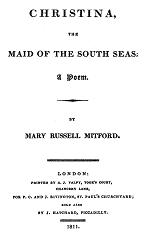
1811 - Mary Russel Mitford's epic poem, Christina Maid of the South Seas Christina, the Maid of the South Seas: A Poem. London: A. J. Valpy, 1811. | |
|
An interesting application of imagination when the only thing known of the colony on Pitcairn's Island was what had been related about Folger's discovery in 1808. | ||
|
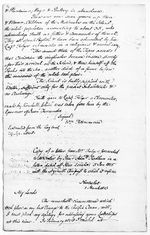
Capt. Mayhew Folger's letter to the Admiralty about his discovery of the mutineers' colony on Pitcairn's Island. This transcription is taken from documents in Series 71.03 'Copy of a letter from Mr Folger, forwarded to Mr Croker by Rear Adml Rodham...' 1 March 1813. in the collection of the State Library, New South Wales. The overall series name is: Series 71: Papers concerning the discovery of Pitcairn Island and the mutineers of HMS Bounty, 1808-1809, 1813-1815, [1845] Frame numbers used for the transcription:
| |
|
Captain Mayhew Folger, discoverer of the the mutineers' colony on Pitcairn's Island, writes the Admiralty, in the midst of the War of 1812, noting his discovery and sending the Bounty's asimuth compass that had been given to my by Adam Smith (i.e. John Adams) in 1808. | ||
|
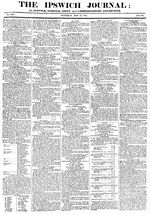
The First Account of the Royal Navy's Discovery of the Pitcairn's Island Colony is Brought to England by H.M.S. Cherub in 1815. "Wednesday's Post.", The Ipswich Journal (Ipswich, England), Saturday, May 13, 1815. British Library Newspapers, Part I: 1800-1900. Web. 1 Dec. 2016. | |
|
Two British warships, H.M.S. Briton and H.M.S. Tagus, returning to Valparaiso from the campaign against Captain David Porter of the U.S. Frigate Essex in the Pacific, sight an island not on their charts which they assume is Pitcairn's Island. Initially unaware of Captain Mayhew Folger's prior discovery in 1808, they are surprised at finding an English-speaking colony in the South Seas. H.M.S. Cherub, arriving in England two months before the Briton, brought a report of the Pitcairn's discovery by Captain Sir Thomas Staines. | ||
|
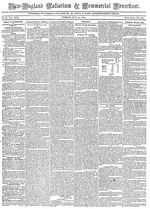
American Newspaper Accounts of the 1814 'Discovery' of Pitcairn's Island by the British Warships
Briton (Captain Staines) and
Tagus (Captain Pipon).
Merrimack Intelligencer (Haverhill, | |
|
The first account of the 'discovery' of the mutineers' colonly on Pitcairn's Island by the Briton and Tagus to reach the United States was brief but it noted that earlier the Topaz of Boston, Captain Folger, had visited about 6 years earlier. This article was reproduced in a number of other American newspapers. | ||
|
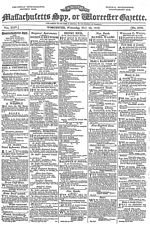
Sir Thomas Staines' Early account of the Rediscovery of the Colony on Pitcairn's Island in 1814: The Visit of H.M.S. Briton. "From Late English Papers: Mutineers of the Bounty", Thomas's Massachusetts Spy, or Worcester Gazette (Worcester, Massachusetts), May 22, 1816, page [4]. Readex: America's Historical Newspapers. Web. 30 Nov. 2016. |
|
The Descendants of the Bounty's Crew: As First Discovered by the Briton and Tagus Frigates. – From the Unpublished Mss. of the Late Capt. Pipon, R.N. – September 1814. "The Descendants of the Bounty's Crew: As First Discovered by the Briton and Tagus Frigates. – From the Unpublished Mss. of the Late Capt. Pipon, R.N." The United service journal, 1834, Pt.1:pp.191-199. | |
|
While Captain Pipon's journal entries covering the discovery of the mutineers' colony by two British men-of-war in 1814 was not published in full until 1834, parts of his account appeared in contemporary journal and newspaper accounts. | ||
|
Extract from John Barrow's 1815 Quarterly Review article on Captain David Porter's Journal of a Cruize ... " "Journal of a Cruize made to the Pacific Ocean by Captain David Porter, in the United States Frigate Essex, in the years 1812, 1813, and 1814, containing Descriptions of the Cape de Verd Islands, Coasts of Brazil, Patagonia, Chili and Peru, and of the Gallapagos Islands. Also a full Account of the Washington Group of Islands; the Manners, Customs, Dress of the Inhabitants, &c. &c.", Quarterly Review, Vol.13, No. 26 (July 1815), p.374—383. | |
|
John Barrow, the long-time Second Secretary to the Admiralty, brings the Mutiny on the Bounty / Pitcairn's Island story up to date by summarizing communications to the admiralty from Captain Mayhew Folger of the Topaz, Captain Thomas Staines of H.M.S. Briton and Captain Philip Pipon of H.M.S. Tagus. | ||
|
The January 1816 Naval Chronicle précis of the 1815 Quarterly Review account of Pitcairn's Island and the history of the Bounty Mutineers. "Mutineers of the Bounty", Naval Chronicle, Vol. 35, (Jan 1816), pp.17-25. | |
|
Many newpapers and journals reproduced this article in 1816 and following years. | ||
|
John Barrow's reworked account of Pitcairn's Island from the 1815 Quarterly Review This transcription has been made from the following: "Discovery of an English Colony on Pitcairn's Island." in | |
|
This account is digested from John Barrow's widely printed and circulated 1815 extract from his review of Captain David Porter's Journal of a Cruize ... The lists of mutineers apprehended in Tahiti, the letters of Captain Mayhew Folger of the Topaz, and Sir Thomas Staines of H.M.S. Briton which appeared in the original have been excluded here. | ||
|
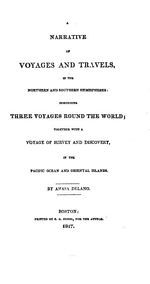
1817 - Amasa Delano's Narrative on Pitcairn's Island. Amasa Delano. | |
|
Transcribed here are chapters 5 and 6 of Delano's Narrative which deal with the history of the mutiny on the Bounty and the discovery of the Pitcairn's Island community by his friend Captain Mayhew Folger of the ship Topaz. | ||
|
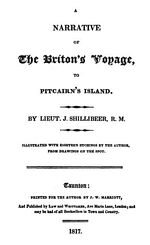
Shillibeer's account of the Briton's 'discovery' of Pitcairn's Island in 1814. Shillibeer, John, 1786-1841. | |
|
Despite the title of this book, only one chapter is devoted to the visit of the Briton and Tagus to Pitcairn's Island. Shillibeer himself did not go ashore at the island -- only the two captains landed. | ||
|
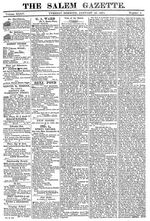
The 1817 visit of the American ship Sultan to Pitcairn's Island. The source of the transcription is an article in the January 16, 1821 issue of the Salem Gazette, page 2. According to Topliff's introduction, the article is an expansion of his earlier article in the New-England Galaxy of January 12, 1821. | |
|
Samuel Topliff's 1821 Salem Gazette article on the visit of the Sultan to Pitcairn's Island in October 1817. | ||
|
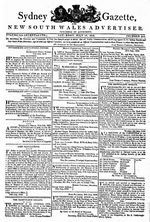
1818/1819 Account of the early history of Pitcairn's Island by Jenny (Teehuteatuaonoa), once the consort of John Adams and later that of Isaac Martin. This transcription is from: "Account of the Mutineers of the Ship Bounty, and their Descendants at Pitcairn's Island", Sydney Gazette and New South Wales Advertiser, July 17, 1819, p.3. | |
|
Jenny (Teehuteatuaonoa) left Pitcairn's Island in 1817 on board the Sultan. Some months after her departure she once again returned to Tahiti. There, on several occasions, she told the story of the Bounty mutineers. Her account is one of the most complete eye-witness accounts of the early history of the Pitcairn's Island colony. | ||
|
1819 - Captain Henderson of the Hercules letter to the Calcutta Journal. "Pitcairn's Island." The Calcutta Journal or Political, Commercial, and Literary Gazette. Vol. IV, No. 139 (July 20, 1819). pp. 261-263. Full text. | |
|
Captain James Henderson of the trading ship Hercules tells of his first visit to Pitcairn's Island on January 18, 1819. He also relates the story of the mutiny of the Bounty as told to him by John Adams. | ||
|
Captain Henderson of the Hercules on his January 1819 Visit to Pitcairn's Island. "Pitcairn's Island", The Asiatic Journal and Monthly Register for British India and its Dependencies, Vol. X, No. 55 (July 1820), pp.36-40. | |
|
Captain Henderson sent notes of his first visit to Pitcairn's Island to the Calcutta Journal. The article in the Asiatic Journal includes Henderson's remarks between a short history of the Pitcairn's Island community and Jenny's account of the island's history. | ||
|
Following the January 1819 visit to Pitcairn's Island of the ship Hercules, Captain Henderson, a subscription for its residents is raised in Calcutta. "Descendants of the Bounty's Crew, on Pitcairn's Island", The Calcutta Journal or Political, Commercial, and Literary Gazette. Vol. IV, No. 133 (July 13, 1819), cols. 161-162 to 167-168. | |
|
This publication was soliciting money and materials for the residents of Pitcairn's Island. The bulk of the article describing the island and its history is reprinted from the Naval Chronicle, Vol. 35, January 1816, pp.17-25, which had the title "Mutineers of the Bounty". | ||
|
Extract from the Journal of Captain Henry King of the Elizabeth - March 1819. This transcription is from: "Extract from the Journal of Captain Henry King of the Elizabeth", The Edinburgh Philosophical Journal, Vol. 3, no. 6 (Oct 1820), pp. 380-388. | |
|
The first of two visits by the British whaleship Elizabeth to Pitcairn's Island. Henry King was the captain in March 1819; William Douglas was the captain on the second visit – probably in 1820. In June 1824 the Elizabeth was attacked by natives of the island Vavoo in the Friendly Islands where Captain Douglas died of wounds he received. Captain Thomas Raine of the English ship Surry remarked in his report on Pitcairn's Island that the Pitcairners "[I]n drinking healths they always added Capt King and Capt Douglas ...". | ||
|
John Adams' Letter to his brother in London, January 18, 1819. "To the Editor of the European Magazine.", | |
|
This letter, written by John Adams on Pitcairn's Island, to his brother in London was probably carried initially by Captain Henderson in the Hercules who was en route to Calcutta. | ||
|
John Adams' Letter to his brother in London, March 3, 1819. "To the Editor of the European Magazine.", | |
|
This letter was probably carried to London by the English South Sea whaleship Elizabeth, Captain Henry King. The Elizabeth arrived at Deptford on July 13, 1819. | ||
|
Captain Thomas Raine of the ship Surry of London visits Pitcairn's Island in April 1821. "Narrative of a Visit to Pitcairn's Island, in the Ship Surrey, in the year 1821. By Capt. Raine", The Literary Chronicle and Weekly Review. No. 268, July 3, 1824. pp. 425-427. & | |
|
"Narrative of a Visit to Pitcairn's Island in the year 1821", [Continued from p. 427], The Literary Chronicle and Weekly Review. No. 270, July 17, 1824. pp. 460-462. | ||
|
The original source of the article reprinted in the Literary Chronicle of London was the following article: Thomas Raine. Earlier in April, the Surry rescued three crewmen of the Nantucket whaleship Essex (which had been sunk by a whale) who had been stranded there for three and a half months. Captain Raine had been contracted by Commodore Ridgely of the U.S. frigate Constellation, to pick up the three crew members of the Essex. | ||
|
Letter from a "professional gentleman" about his December 1822? visit to Pitcairn's Island. "Pitcairn's Island," | |
|
The identity of this "professional gentlemen" is not known. There appears to be no record of a vessel visiting Pitcairn's Island in December 1822. | ||
|
Reports of the Russell and Apollo, 1822. "New Bedford Mercury" New Bedford, Massachusetts, August 9, 1822. | |
|
The U. S. frigate Constellallon reports on the Russell and the Apollo following their visit to Pitcairn's Island. This vessel also brought news of the Pitcairn's Island visit to the United States prior to Captain Frederick Arthur's return to New Bedford in the Russell on October 7, 1822. |
||
|
1822 - Captain Ridgely, of the U.S. Frigate Constellation, gives report to a New York newspaper which was copied from Captain Frederick Arthur's journal on the visit of his whaleship, the Russell, to Pitcairn's Island, March 8-12, 1822. "Pitcairn's Island." Niles' Weekly Register, Vol. 11 No. 8, new series [Vol 23 no.5, whole number 580], October 26, 1822, pp.123-124. | |
|
The widely published account of Captain Frederick Arthur on his visit to Pitcairn's Island in March 1822 in the ship Russell and accompanied by the ship Apollo. |
||
|
An 1823 American newspaper reprints a London newspaper article about Captain Arthur's visit to Pitcairn's Island in March 1822. "Late Omissions / Pitcairn's Island," The Columbian Star (Washington, D.C.,) March 22, 1823, p. 4. | |
|
This is one of several newspaper articles about the visit of whaleship Russell, Captain Frederick Arthur, to Pitcairn's Island in March 1822. |
||
|
1822 - Lady's Monthly Museum "Epitome of Public Affairs, for September, 1822." The Lady's monthly museum; or, Polite Repository of Amusement and Instruction. Improved Series, v.16 (Oct 1822) p.224-225 Full text. | |
|
This article is an abridgement of Captain Arthurs report which was widely published in 1822 and 1823. | ||
|
1822 - Captain Arthur's Report (Asiatic Journal) "Pitcairn's Island." The Asiatic journal. Vol.14, No. 82 (Oct. 1822.) pp.414-415 Full text. | |
|
Yet another published copy of Captain Arthur's report in the Asiatic Journal. | ||
|
1822 - Arthur report in the Investigator (London) "Pitcairn's Island." The Investigator; or, Quarterly Magazine. v.6, No. 12 (April 1823). p.427-429 Full text. | |
|
Captain Arthur's report republished in London's Investigator. | ||
|
|
The second visit of the ship Hercules, Captain Henderson, to Pitcairn's Island in May 1822. "Pitcairn's Island", | |
|
This short news note appeared in many newspapers in Britain and the United States. |
||
|
In April 1822, the Hercules, Captain Henderson, visits Pitcairn's Island for the second time and delivers the gifts from the Calcutta subscription. "Pitcairn's Island", | |
|
After Captain Henderson's first visit to Pitcairn's Island in 1819 a subscription was taken in Calcutta for the benefit of the island's residents. In 1822 the Hercules delivered the gifts while passing from Valparaiso to Calcutta. Notice of this visit does not appear in the shipping register which accompanies the Pitcairn Island Register. | ||
|
1823 - Lord Byron's The Island. The Island, or Christian and his Comrades. London: Printed for John Hunt, 1823. | |
|
The poet Byron's narrative poetic fantasy about Chritian and his compatriots after the Bounty mutiny. | ||
|
July 1824 Letter from John Adams to Rev. Hiram Bingham. "Letter from Pitcairn's Island to the Rev. Hiram Bingham". The Missionary Herald, Vol. 22, No. 9 (September 1826), pp. 278. | |
|
Once again John Adams appeals for a minister of the gospel to be sent to Pitcairn's Island. | ||
|
The Asiatic Journal's list of Pitcairn's Island inhabitants on April 24, 1823. "Inhabitants of Pitcairn's Island", Asiatic Journal, Vol. 20, No. 119 (November 1825), p. 518. | |
|
A list of the inhabitants of Pitcairn's Island dated April 24, 1823. The individual who recorded this list and the vessel which took him to the island are not known. | ||
|
Captain Frederick Beechey at Pitcairn's Island in 1825. Frederick W. Beechey | |
|
Captain Beechey's account of his visit to Pitcairn's Island in H.M.S. Blossom was perhaps the most informative and detailed description and history recorded in the nineteenth century. | ||
|
1833 – "The Mutineers" & "The Happy Islanders".
"The Mutineers" & "The Happy Islanders". The Bristol Job Nott, or, Labouring man's friend. No. 79 (June 13, 1833) & No. 80 (June 20, 1833). pp.315-316 & pp.318-320. Full text. | |
|
A quirky socialist view of the history of Pitcairn's Island based on Captain Beechey's narrative of his visit in December 1825 (published 1831). | ||

|
1825 William Cullen Bryant's 1825 poem -- "A Song of Pitcairn's Island". B. [William Cullen Bryant], | |
|
Bryant was an editor of the new publication The New York Review and Athenaeum Magazine when, in its inaugural issue, he first published the poem "A Song of Pitcairn's Island". The poem was very popular and appeared in numerous anthogies and magazines of the time. | ||
|
1827 - Pitcairn's Island at the time of the whaleship Connecticut's visit in February 1827. "Pitcairn's Island", The Boston Recorder (Boston, Massachusetts), April 30, 1829, page 69. | |
|
This newspaper article was coauthored by two missionaries returning to the United States from the Sandwich Islands. One of the missionaries, Dr. Abraham Blatchley, returned to the United States on the whaleship Connecticut, which stopped at Tahiti and Pitcairn's Island in early 1827. The article mentions Jane Quintals departure from Pitcairn's Island for Tahiti. | ||
|
1829 - United Service Journal's retelling of the Mutiny on the Bounty "Review of the Mutiny on Board the Bounty." United Service Journal 1829. Part II, No. 7, (July 1829) pp.44-53. Full text. | |
|
This retelling of the Bounty mutiny uses the accounts of James Morrison and Heywood from the article in Marshall's Naval Biography in addition of Captain Bligh's account. | ||
|
|
1829 - The Bounty's Crew on Pitcairn's Island "Pitcairn's Island – The Bounty's Crew." United Service Journal. 1829. Part II, No. 11, (Nov 1829) pp. 589-593 Full text. | |
|
Decribes the tumultuous early years of the mutineers on Pitcairn's Island. The substance of this account relies heavily on Jenny's account. | ||
|
1829 - Pitcairn's Island (Asiatic Journal) "Pitcairn's Island" Asiatic Journal v.27, no. 160 (April, 1829) p.517 Full text. | |
|
A short news note describing Pitcairn's Island generally with a population of 69 – including the (unnamed) newcomer, John Buffett. | ||
|
1830 – Holbrook's "Letters from a mariner".
Silas Pinckney Holbrook, 1796-1835. "Letters from a mariner, No. 2." Sketches by a Traveller. Boston: Carter and Hendee, 1830. pp. 6-9. Selection. | |
|
This essay about a visit to Pitcairn's Island was taken from a February 1828 newspaper article. The author wrote about many places he did not visit. Here it seems he has created a story from the accounts of Barrow, Shillibeer, Staines, Pipon and others from the preceding ten or twelve years. | ||

|
1830 - First News of John Adams' Death in Britain. "Death of John Adams, &c.", The London Literary Gazette; and Journal of the Belles' Lettres, Arts, Sciences, &c., No. 713 (September 18, 1830), p.610. | |
|
John Adams died March 5, 1829. News of his death reached England in a letter written to Captain Frederick Beechey. | ||
|
1830 Kotzebue Otto Von Kotzebue. | |
|
While Captain Kotzebue did not visit Pitcairn's Island in 1823-26,he did include a 25-page chapter on the island in the account of his voyage. In his retelling the stories of the mutiny on the Bounty and the history of the Pitcairn's Island community he seems to rely on Shillibeer's A Narrative of the Briton's Voyage, to Pitcairn's Island. Two other sources were consulted. The first was the captain of an American ship whom he met in Chile. The other was Jenny - the Tahitian woman who had left Pitcairn's Island in 1817 on the ship Sultan. The master of the American ship Eagle was apparently Captain William Morrill. This vessel was from Georgetown, D.C., and carried stores for the American navy squadron on the Pacific coast of South America. The Eagle sailed November 28, 1824 for Valparaiso and Lima and returned to Baltimare on November 4, 1825. | ||
|
1830 - Midshipman's Orlebar's experiences on Pitcairn's Island Lieut. J. Orlebar, R.N. A midshipman's journal, on board H.M.S. Seringapatam, during the year 1830: containing brief observations on Pitcairn's Island and other islands in the South Sea. London: Whittaker, Treacher, and Co., 1833 pp.15-24. Selection. | |
|
The account of a young midshipman in H.M.S. Seringapatam who was able to go onshore for a one-day visit at Pitcairn's Island in March, 1830. He breakfasted at the house of George Young and family where he found the old Tahitian woman (apparently Toofaiti or Nancy, George Young's mother) unsettling. Orlebar reported the population as being 81 persons when he visited. | ||
|
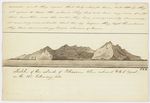
1831 – Journal from the voyage of the HMS Comet from Sydney to Pitcairn Island
Keeper unknown - held by the State Library of New South Wales. Journal from the voyage of the HMS Comet from Sydney to Pitcairn Island, captained by Alexander Sandilands, Royal Navy, 1830-1831. MLMSS 8104/Box 1X Includes four pen and wash drawings and a chart of the voyage. Originally transcribed by Robin Mathews for the State Library of New South Wales. Complete transcription. | |
|
"Under the command of Captain Alexander Sandlilands RN, the Comet departed Sydney on 27 December 1830, in the company of the Government barque Lucy Ann, to relocate some of the island’s inhabitants to Tahiti. The relocation was a response to concerns, initially raised by John Adams – the ‘leader’ of the Pitcairn Island community – that the island could not continue to sustain the growing population. The decision was made to relocate the islanders to Tahiti. "Official reports of the voyage of the Comet and the relocation of the inhabitants from Pitcairn Island to Tahiti were prepared by Captain Sandilands and forwarded to the Lieutenant Governor of New South Wales on 9 April 1831 and Rear Admiral Sir Edward Owen of the British Admiralty on 26 May 1831. "The relocation of the Pitcairners to Tahiti was not a success. Soon after their arrival, 12 died of fever, and within six months the remainder were returned to Pitcairn Island." -- from the Library's catalog record. | ||
|
1831 – Maria Theresa report from Tahiti
"Interesting occurrence." The Sailor's magazine, and naval journal. No. 36 / v.3 (Aug 1831) pp.388-389 Full text. | |
|
The Maria Theresa on its return to New Bedford in July 1831 reports on recent events in Tahiti. Also notes Elisha Loomis' earlier account about a meeting in Tahiti with Jane Quintal in early 1827. | ||
|
1832 – George Bennett & Jane Quintal at Rurutu
"Island of Rurutu." The Athenaeum: Journal of English and Foreign Literature, Science, and the Fine Arts. No. 234, April 21, 1832. p.261. Full text. | |
|
George Bennett's account of his meeting Jane Quintal on the Island of Rurutu in 1829 from the manuscript of Frederick Debell Bennett's book which was not published until 1840. | ||
|
1829 - Jane Quintal at Rurutu - George Bennett
Bennett, Frederick Debell. Narrative of a whaling voyage round the globe, from the year 1833 to 1836. Comprising sketches of Polynesia, California, the Indian Archipelago, etc. with an account of southern whales, the sperm whale fishery, and the natural history of the climates visited. v.1. London, R. Bentley, 1840 pp.30-31 (note). Selection. | |
|
The Pitcairn Island Register has the following entry for December 19, 1826: "Jane Quintal left the Island in the Brig Lovely Ann of London Capn. Blythe." About fifteen years later, Frederick Debell Bennett, in his classic two-volume Narrative of a whaling voyage round the globe, from the year 1833 to 1836 offered further information courtesy of his brother who was sailing in the Pacific and visited Rurutu in 1829. | ||
|
1831 – Pitcairn's Island. – The Times (London)
"Pitcairn's Island." The Times (London). August 4, 1831, p. 4. Full text. | |
|
The Times reports the removal of the entire population of Pitcairn's Island to Otaheite (Tahiti) in 1831 from an article in the New Bedford Mercury. | ||
|
1831 – HMS Comet & Tahiti Asiatic Journal
"Asiatic Intelligence – Polynesia." Asiatic Journal and Monthly Miscellany. New Series, v. 8, No. 30 (June 1832). pp. 106-107. Article. | |
|
Reports from Calcutta, Madras and the Sandwich Islands on Tahiti and the move of Pitcairn's population to that island in March 1831. | ||
|
1831 – Captain Driver and the Pitcairners
Harriet Ruth Cooke. The Driver family: a genealogical memoir of the descendants of Robert and Phebe Driver, of Lynn, Mass. With an appendix, containing twenty-three allied families. 1592-1887. New York : Printed for the author by J. Wilson and son, 1889. Full text. | |
|
Captain William Driver of the hermaphrodite brig Charles Daggett carried the surviving sixty-five members of the Pitcairn community from Tahiti to their home on Pitcairn's Island. According the account written by his niece in a family geneaology Driver had been visited on the Charles Daggett by Tahiti's Queen Pomare who asked that he take the Pitcairners to their home island. Driver received some old copper, several blankets and a little over one-hundred dollars in script from missionaries for this venture. Driver is recognized as first person to refer to the American flag as "Old Glory". His original flag and some papers were given to the Essex Institute (now Peabody Essex Museum) in the 1880's. | ||
|
1831 – The Return of the Pitcairners.
Chas. S. Osgood and H.M. Batchelder. Osgood. Historical sketch of Salem, 1626-1879 Salem: Essex Institute, 1879. viii, 280 p., [15] leaves of plates : ill., ports. ; 25 cm. Selection. | |
|
Particulars about the return of the Pitcairners from Tahiti to their home island in 1831 apparently from Captain William Driver of the brig Charles Daggett. The vessel left Tahiti on August 15 and arrived at Pitcairn's Island on September 3. There were sixty-five passengers. Driver received the following for payment: some old copper, twelve blankets and 129 dollars in missionary script. | ||
|
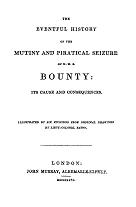
1831 - John Barrow's History. The eventful history of the mutiny and piratical seizure of H.M.S. Bounty: its cause and consequences. Illustrated by six etchings from original drawings. by lieut.Colonel Batty. London: John Murray, Albemarle-street. 1831. | |
|
The first book-length history of both the Mutiny and the colony on Pitcairn's Island. | ||
|
1831 – "The Mutineers of the Bounty" – The Friend: a religious and literary journal
"The Mutineers of the Bounty." The Friend: a religious and literary journal. Vol. 5, no. 4 (November 5, 1831), pp.25-26, Vol. 5, no. 5 (November 12, 1831), pp.33-34, Vol. 5, No. 6 (November 19, 1831), pp. 41-42. Full text. | |
|
A brief history in three parts of Pitcairn's Island from the mutiny on the Bounty to the removal of the population of the island to Tahiti in early 1831. "The Friend" was the premier Quaker publication in the United States. | ||
|
John Barrow's introduction to the five documents he presented to the Royal Geographical Society of London on June 10, 1833.
"Recent Accounts of the Pitcairn Islanders" Communicated by John Barrow Esq., F.R.S. Read 10th June, 1833. Journal of the Royal Geographical Society of London, Vol. 3 (1833), p. 156 of pp.156-168. FULL TEXT |
|
|
Barrow briefly describes the five documents received by the Admiralty that he is communicating to the Society. | ||
|
|
Extract of journal kept by Captain Waldegrave. (Mar 1830)
"Recent Accounts of the Pitcairn Islanders" Communicated by John Barrow Esq., F.R.S. Read 10th June, 1833. Journal of the Royal Geographical Society of London, Vol. 3 (1833), pp.156-168. FULL TEXT |
|
|
Captain Waldegrave, of H.M.S. Seringapatam, describes his visit to Pitcairn's Island in mid-March 1830. It was the first visit to the island by a Royal Navy vessel since Beechey in the Blossom and since the death of John Adams. Waldegrave raises some concern about the arrival of three Englishmen (George Hunn Nobbs, John Buffett, and John Evans} and notes dissension about the rival claims of Nobbs and Buffett to leadership of the islanders as pastor and school-master. | ||
|
|
Despatch addressed to the Lieutenant Governor of New South Wales by Captain Sandilands. (Apr 9, 1831
"Recent Accounts of the Pitcairn Islanders" Communicated by John Barrow Esq., F.R.S. Read 10th June, 1833. Journal of the Royal Geographical Society of London, Vol. 3 (1833), pp.162-164. FULL TEXT |
|
|
Captain Sandilands, of the sloop H.M.S. Comet, reports on his mission to remove the Pitcairn's islanders to Otaheite (Tahiti). He had been given the use of the New South Wales barque "Lucy Ann" for this purpose. On arrival in Tahiti Sandilands found the island in near civil war. He disembarked the Pitcairners for their disastrous stay and arranged for their maintenance for six months. | ||
|
|
Despatch from Captain Fremantle of the Challenger. (May 30, 1833)
"Recent Accounts of the Pitcairn Islanders" Communicated by John Barrow Esq., F.R.S. Read 10th June, 1833. Journal of the Royal Geographical Society of London, Vol. 3 (1833), pp.164-167. FULL TEXT |
|
|
Captain Charles Howe Fremantle, after discovering that the Pitcairn islanders had returned from Otaheite (Tahiti), visited Pitcairn's Island on January 10, 1833 . Here he found Joshua Hill who told him that on his [Hill's] arrival the inhabitants were not observing the sabbath and the Englishmen and others were in a state of drunkeness; Hill claimed to have put a stop to all the "irregularity". | ||
|
|
Letter from Joshua Hill to the Earl of Ripon. (Dec 28, 1832)
"Recent Accounts of the Pitcairn Islanders" Communicated by John Barrow Esq., F.R.S. Read 10th June, 1833. Journal of the Royal Geographical Society of London, Vol. 3 (1833), pp.156-168. FULL TEXT |
|
|
Joshua Hill reports his arrival at Pitcairn and after describing a dysfunctional and degraded society (as he saw it) requests to be nominated permanent agent there. The Earl of Ripon, who had briefly been Prime Minister, was Secretary of State for War and the Colonies in Grey's ministry between 1830 and 1833. | ||
|
|
Another letter of Joshua Hill to the Earl of Ripon (Dec 28, 1832)
"Recent Accounts of the Pitcairn Islanders" Communicated by John Barrow Esq., F.R.S. Read 10th June, 1833. Journal of the Royal Geographical Society of London, Vol. 3 (1833), p168. FULL TEXT |
|
|
Hill complains that Captain Fremantle of H.M.S. Challenger does not feel he has the authority of remove John Buffett, John Evans, and George H. Nobbs from the island. | ||
|
1834 – Dumont d'Urville Voyage pittoresque autour du monde ...
Jules-Sébastien-César Dumont d'Urville, 1790-1842. Voyage pittoresque autour du monde: résumé général des voyages de découvertes ... / publié sous la direction de M. Dumont d'Urville ... Accompagné de cartes et de nombreuses gravures en taille-douce sur acier, d'après les dessins de M. de Sainson, dessinateur du voyage de l'Astrolabe. Paris: Furne et Cie, 1843. Volume 1. Selection. | |
|
In a two-volume work on exploration and discovery in the Pacific Ocean is this often inaccurate historical summary of the history of Pitcairn Island from its discovery until the return of the Pitcairners from Tahiti in 1831 and the visit of Captain Fremantle in H.M.S. Challenger in early 1833. From Captain Fremantle's account it suggests the island may have found it savior after the death of John Adams in the person of Joshua Hill! | ||
|
1837 – On Pitcairn Island Moerenhout
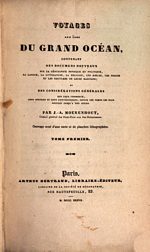
Jacques Antoine Moerenhout. Voyages aux îles du grand océan. Paris: Arthus Bertrand, 1837. 2 vols, 8vo, xv, [1], 574; [4], 520, vii pp. Illustrated with 4 lithographic plates, folding chart. Pages: 29-84 in Vol. 1; 280-322 in Vol. 2. Selections. | |
|
Moerenhout landed in Pitcairn Island in January 1829 as supercargo on the schooner Volador from Valparaiso. Several years later, in his two-volume work on his three Pacific voyages, he devoted a significant portion to his visit and to the history of the island. Two years following his visit to Pitcairn Island, he was an observer in Tahiti during the Pitcairners' short stay there. | ||
|
1837 - Extract from despatch of Captain Russell (H.M.S. Actaeon) to Commodore Mason Document no. 59. January 1837. "Extract from despatch of Captain Russell (H.M.S. Actaeon) to Commodore Mason". Pages 1392 to 1397. Full text. | |
|
Captain Russell reports to the Commodore of the Pacific Squadron on the factions present on Pitcairn's Island owing chiefly to the actions of Joshua Hill. | ||

|
1838 - Dalrymple Hay on Pitcairn and Removal of Joshua Hill Sir John C. Dalrymple Hay, Bt. Lines from my Log-Books. Edinburgh: David Douglas, 1898. pp. 66-67; 338-340. Selection. | |
|
Dalrymple Hay's long after-the-fact brief account of his vist to Pitcairn's Island in December 1837 while on board H.M.S. Imogene — the ship that took Joshua Hill from the island to Valparaiso. Accompanying this article are statistical tables of the population and natural resources of Pitcairn's Island. | ||
|
1839 - Extract from the despatch of Captain Eliott (H.M.S. Fly) to Rear-Admiral Ross Document no. 60. Jan 25, 1839. "Extract from the despatch of Captain Eliott (H.M.S. Fly) to Rear-Admiral Ross, enclosing 'Regulations for the appointment of a Magistrate at Pitcairn Island". Page 1231. Full text. | |
|
Extract from the message of Captain Eliott transmitting his 'Regulations for the appointment of a Magistrate at Pitcairn Island'. These "Regulations" were the subject of considerable attention by the Admiralty and Colonial Office over the next months. | ||
|
1839 - Rear-Admiral Ross to Admiralty enclosing Captain Eliott's report Document no. 61. Feb 8, 1839. "Rear-Admiral Ross to Admiralty enclosing Captain Eliott's report of 25 January 1839." Page 1244 to 1249. Full text. | |
|
Captain Elliott's report is sent from Pacific Station to the Admiralty. | ||
|
1839 - Admiralty (Barrow) to Colonial Office (Stephen) enclosing extract from Captain Eliott's report Document no. 62. Sep 30, 1839. "Admiralty (Barrow) to Colonial Office (Stephen) enclosing extract from Captain Eliott's report." Page 1250 to 1257. Full text. | |
|
Barrow of the Admiralty sends and extract of Captain Eliott's report to the Colonial Office which tells of threats made by the crew of a whale ship on the Pitcairn Islanders. | ||
|
1839 - Colonial Office minutes regarding Captain Eliott's report Document no. 63. Oct 2, 1839. "Colonial Office minutes regarding Captain Eliott's report." Pages 1258 to 1259. Full text. | |
|
Captain Eliott's report is discussed within the Colonial Office. | ||
|
1839 - Colonial Office to Admiralty (Barrow) Document no. 64. Oct 26, 1839. "Colonial Office to Admiralty (Barrow)." Pages 1260 to 1265. Full text. | |
|
Colonial Office informs the Admiralty that the Secretary of State for War and the Colonies, Lord John Russell, has approved sending arms and ammunition to Pitcairn's Island. | ||
|
1840 Bennett Bennett, Frederick Debell | |
|
Frederick D. Bennett's book was one of several used by Herman Melville as basic sources for Moby Dick. Bennett, a surgeon, wrote of the island's history, ethnography, and natural environment. Pitcairn's Island was in turmoil when Bennett's ship, the Tuscan of London (Captain T.R. Stavers) arrived in March 1834 owing to the recent establishment of Joshua Hill on the island. When the Tuscan sailed, it carried the three Englishmen who had lived for some years on Pitcairn's and were married to Pitcairn women. | ||
|
1840 - Colonial Office correspondence regarding distribution of copies of the Appeal Cases Document no. 65. July-August 1840. Colonial Office correspondence regarding distribution of copies of the Appeal Cases." Pages 1481. Full text. | |
|
Colonial Office consideration of sending printed copies of Appeal Cases to the colonies. This document is not related to Pitcairn's Island. | ||
|
1841 - Extract from report of Captain Jones (H.M.S. Curaçoa) to Rear-Admiral Ross Document no. 66. September 6, 1841. "Extract from report of Captain Jones (H.M.S. Curaçoa) to Rear-Admiral Ross". Page 1277. Full text. | |
|
Captain Jones of H.M.S. Curaçoa brings arms and ammunition to Pitcairn's Island and finds an influenza epidemic on the island. | ||
|
Buffett's 20 Years Residence on Pitcairn – from The Friend, Oahu. The Friend, v.4: No. 1, Jan. 1, 1846, pp. 2- 3; No. 3, Feb. 2, 1846, pp.20-21; No. 4, Feb. 14, 1846, pp.27-28; No. 5, Mar. 2, 1846, pp.34-35; No. 7, Apr. 1, 1846, pp.50-51; & No. 8, May 1, 1846, pp.66-68. Full text. | |
|
A history of Pitcairn island by the first 'foreigner' to settle on the island in 1823. Buffett at various times served as teacher, spiritual leader, and carpenter on the island. His telling of the Pitcairn story was done serially in seven parts. | ||
|
1844 - Lieutenant Commander Hunt (H.M. Ketch Basilisk) to Rear-Admiral Thomas Document no. 67. August 1, 1844. "Lieutenant Commander Hunt (H.M. Ketch Basilisk) to Rear-Admiral Thomas". Pages 1292 to 1307. Full text. | |
|
Lt. Commander Hunt gives a less than favorable report of the state of affairs on Pitcairn's Island. He found it necessary to suggest several new laws or regulations related to the school. He also provides a list of equivalents for money in island produce and a list of "presents most required". Additionally he includes a demographic report of the island population and an account of ships visiting Pitcairn's. | ||
|
1844 - Quintal letter to Rev. Damon about Pitcairn's Island.
"Pitcairn's Island." The Nautical Magazine and Naval Chronicle, for 1845. Enlarged series, No. 1 — vol. for 1845. p. 164. Full text. | |
|
Letter from Arthur Quintal, junior to Rev. S. C. Damon, pastor of the Seamen's Bethel Church and chaplain of the Honolulu American Seamen's Friend Society in Honolulu providing a statement of the general condition of Pitcairn Island in early 1844. This letter was in response to a query from Rev. Damon in September 1843. | ||
|
1846 - Colonial Office Minutes regarding Lieutenant-Commander Hunt’s proposal to appoint a Governor of Pitcairn Island Document no. 68. January 14 &19, 1846. "Colonial Office Minutes regarding Lieutenant-Commander Hunt’s proposal to appoint a Governor". Pages 1308 to 1311. Full text. | |
|
The Colonial Office is not in favor of appointing a governor of Pitcairn's Island and has concerns about the viability of the island population into the future. | ||
|
1848 – Captain Worth's Report on Pitcairn's Island.
"Pitcairn's Island." Colonial Church Chronicle and Missionary Journal. Vol. III, No. 35 (May 1850). pp. 414-419. Full text. | |
|
A republication of Captain Henry J. Worth's report of his visit in the H.M.S. Calypso to Pitcairn's Island in 1848. His report is wide-ranging, covering geography, demographics, economics, productions, shipping, vital statistics, etc. His report was intended to bring up to date the reports of earlier Royal Navy visitors. | ||
|
|
1850 – Rev. W. Armstrong's Letter about Pitcairn's Island.
"Pitcairn's Island." Colonial Church Chronicle and Missionary Journal. Vol. III, No. 36 (June 1850). pp. 472-474. Full text. | |
|
Portion of a January 29, 1850 letter from Rev. W. Armstrong, Chaplain at Valparaiso, to a friend in England. It concerns Pitcairn's Island and describes how Reuben Nobbs was brought to Valparaiso from the island. Rev. Armstrong acted informally as an agent for receiving and sending on gifts for the inhabitants of Pitcairn's Island. | ||
|
|
1847 – Pitcairn's Island history and letters from the islanders in thanks for gifts sent to them by the Society for Promoting Christian Knowledge
"Pitcairn's Island". Colonial Church Chronicle and Missionary Journal, v.3, No.33 (March 1850) pp.334-342 Full text. | |
|
An abbreviated history of Pitcairn's Island followed by several letter from Pitcairn Islanders to Captain Charles Hope, R.N. of H.M.S. Thalia", thanking him for the 'gifts' that were brought from Valparaiso. Also, a letter from Rev. Armstrong, chaplain at Valparaiso, to Thomas B. Murray, secretary of the Society for Promoting Christian Knowledge, regarding the society's gift of books for Pitcairn's Island.. | ||
|
Walter Brodie's classic 1851 work on Pitcairn's Island in the middle of the 19th century. Walter Brodie. | |
|
After becoming stranded on Pitcairn's Island en route from New Zealand to California Brodie collected documents and accounts of the history of the island. The book contains his transcription of the Pitcairn Island Register and the list of shipping for vessels touching at the island. | ||
|
1851 – Gospel Missionary - Pitcairn's Island.
"Pitcairn's Island. The Gospel Missionary. Vol. 1, nos. 4 & 6 (1851) pp. 49-52;& 85-88 Full text. | |
|
A broad review in two parts of Pitcairn's Island history from the Society for the Propagation of the Gospel in Foreign Parts. It is written from a particularly evangelical point of view. This article is strong on this and weak on historical accuracy. | ||
|
Edward Lucett, supercargo on board the schooner Sagaz, visits Pitcairn's Island in 1843.
Edward Lucett. Rovings in the Pacific from 1837 to 1849; with a glance at California / By A Merchant. Vol. II London: Longman, Brown, Green, and Longmans, 1851. pp.1-10 Selection. | |
|
Edward Lucett's visit to Pitcairn's Island on board the schooner Sagaz, Nov. 15, 1843. He gives a general description of the island and its inhabitants. In the notes section are some comments of Lucett from elsewhere in his book where he makes reference to Herman Melville, for whom he apparently had little respect. | ||

|
1852 – Admiral Fairfax Moresby's report
on his visit to Pitcairn's Island.
"Pitcairn's Island" The Times (London, England) Wednesday, Oct. 20, 1852 No. 21251 p.5. Full text. | |
|
Admiral Fairfax Moresby's report on his visit to Pitcairn's Island in August 1852. He notes the population, their food and production, and mentions their reliance on whalers for many of the things they need. A bull, heifer, and ram were delivered to replace previous animals that had succumbed to accidents. Vital statistics for the year 1852 are given and a continuation of the islanders' journal was obtained to extend that reported in Walter Brodie's book. | ||
|
1853 – Quarterly Review article of Brodie and Murray's books.
"Art. III .... [review of seven books]" The Quarterly Review. Vol. 84, No. 187. (December 1853) pp.98-106. Selection. | |
| The Pitcairn's Island part of a lengthy review of seven books about Pacific islands. Walter Brodie's Pitcairn's Island and the Islanders in 1850 (1851) and Rev. Thomas Boyles Murray's Pitcairn: the Islands, the People, and the Pastor. (1853) were included. An abbreviated history of the island precedes the discussion of the two books being reviewed. Joshua Hill is called an "amusing and half-deranged pretender". Carleton's music class is recalled as is Admiral Moresby's visit. | ||
|
1853 – Commander M. Burrow's lecture on Pitcairn's Islnd
M. Burrows. Pitcairn's Island: A lecture delivered at the Christchurch school-room, St. Pancras, January 12, 1853. London: J. Whitaker, 1853. Full text. | |
|
A pamphlet of Commander Burrow's lecture on Pitcairn's Island. This volume is genereally an account of the mutiny on the Bounty, the settlement and subsequent history of the island. Some emphasis is place on the islander's religiosity and on the abilities and character of Rev. Nobbs | ||
|
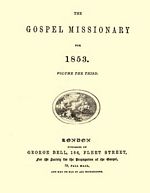
1853 – Gospel Missionary on Murray's Pitcairn, the Island, the People, and the Pastor
"A Day at Pitcairn's Island. The Gospel Missionary. Vol. 3, no. 31 (July 1853) pp. 102-106. Full text. | |
|
Generally extracts from Rev. T. B. Murray's Pitcairn, the Island, the People, and the Pastor. It describes a day in the life of the Pitcairn Islanders. | ||
|
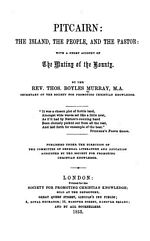
Thomas Boyles Murray's classic mid-19th century history of the mutiny and the colony on Pitcairn's Island. Thomas Boyles Murray | |
|
The first of more than twelve editions of a history of Pitcairn's Island written from a decidely evangelical Chriatian point of view. | ||
|
1853 - Address by Rear-Admiral Moresby to Pitcairn Islanders Document no. 70. May 17, 1853. "Address by Rear-Admiral Moresby to Pitcairn Islanders". Pages 1326-1341. Full text. | |
|
Rear-Admiral Moresby offers suggestions to the Pitcairn Islanders about their laws, government and other matters. | ||
|
1853 - Magistrate Arthur Quintal & Island Councillors Thomas Buffett & Edward Quintal to Rear-Admiral Moresby Document no. 71. January 14 &19, 1846. "Magistrate Arthur Quintal & Island Councillors Thomas Buffett & Edward Quintal to Rear-Admiral Moresby". Pages 1342 to 1345. Full text. | |
|
Island leaders communicate to Rear-Admiral Moresby their desire to follow his recommendations and that they are desirous of a move to some other island, such as Norfolk Island. | ||
|
1853 - Extract of report from Captain Morshead (H.M.S. Dido) to Rear-Admiral Moresby Document no. 72. December 15, 1853. "Extract of report from Captain Morshead (H.M.S. Dido) to Rear-Admiral Moresby". Pages 1346 to 1367. Full text. | |
|
Captain Morshead reports on the condition of the Pitcairn Islanders at the end of 1853. | ||
|
1853 - Rear-Admiral Moresby to Admiralty enclosing letters from Pitcairners Document no. 73. December 31, 1853. "Rear-Admiral Moresby to Admiralty enclosing three letters from Pitcairners, including one to the Queen". Pages 1308 to 1371. Full text. | |
|
Vice-Admiral Moresby's cover letter to Admiralty enclosing two letters from Pitcairners and one from them addressed to Queen Victoria. | ||
|
1853 - Letter from Magistrate and Councillors to Rear-Admiral Moresby (September 12, 1853) Document no. 74. September 12, 1853. "Letter from Magistrate and Councillors to Rear-Admiral Moresby (First enclosure to Moresby's letter of 31 December 1853)". Pages 1372 to 1379. Full text. | |
|
Pitcairner's express gratitude to Rear-Admiral Moresby and others for their kind attention to the welfare of the islanders. | ||
|
1853 - Letter from Magistrate and Councillors to Rear-Admiral Moresby (May 18, 1853) Document no. 75. May 18, 1853. "Letter from Magistrate and Councillors to Rear-Admiral Moresby (Second enclosure to Moresby's letter of 31 December 1853)". Pages 1380 to 1383. Full text. | |
|
A second letter to Vice-Admiral Moresbay thanking him for his gifts of tea and sugar and assuring him that all on the island were in agreement regarding his suggestions for changes in the laws and regulations. | ||
|
1853 - Pitcairners' letter to Queen Victorias. Document no. 76. July 27, 1853. "Letter from Inhabitants of Pitcairn Island to Her Majesty the Queen (Third enclosure to Moresby's letter of 31 December 1853). Pages 1384 to 1391. Full text. | |
|
Pitcairners' request Queen Victoria to formally acknowledge Pitcairn Island as a British possession. | ||
|
1854 – Gospel Missionary - Pitcairn's Island.
"Pitcairn's Island. The Gospel Missionary. Vol. 4, nos. 42 & 46 (June and October 1854) pp. 87-91;& 150-156 Full text. | |
|
Letters of July and November 1853 from G. H. Nobbs on Pitcairn's Island to Rev. T. B. Murray in London. Also extracts and comments on Rev. Murray's book — Pitcairn, the Island, the People, and the Pastor which had gone through four printings in the previouis year accounting for 9,000 copies. | ||
|
1854 – Letter to home in Scotland by an officer of H.M.S. Amphitrite
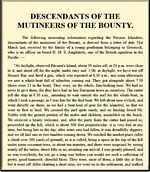
"Descendants of the Mutineers of the Bounty." The Argus (Melbourne, Vic.), Tuesday, 4 Sep 1855, Page 6. Full text. | |
|
From a March 31, 1854 letter of an officer on board H. M. S. Amphitrite to his family in Greenock, Scotland. This ship arrived at Pitcairn's Island on February 17, 1855. At this time the islanders knew that many of their number were going to be moved to Norfolk Island but were unaware of when this would occur. The population at this time was 190 — evenly split between males and females. | ||
|
1854 - Toup Nicolas (British Consul, Tahiti) Letter to the Inhabitants of Pitcairn Island Document no. 77. October 6, 1854. "British Consul, Tahiti (Toup Nicolas) to the Inhabitants of Pitcairn Island". Pages 1392 to 1397. Full text. | |
|
Consul Toup Nicolas informs Pitcairners that the vessel for their transfer to Norfolk Island will be postponed. He also acknowledges the memorial from the Pitcairners to Queen Victoria requesting formal recognition as a British possession. | ||
|
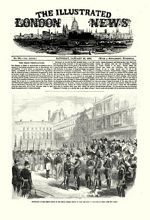
1855 – Pitcairn's Islands as of September 14 & the visit of H.M.S. Amphitrite in February.
"Pitcairn's Island". The Illustrated London News. No. 781 – Vol. XXVIII. (Saturday, January 26, 1856.) p. 92. Full text. | |
|
News from Pitcairn's Island as of September 14,1855. Islanders awaiting transfer to Norfolk Island. Portion of a report of H.M.S. Amphitrite's visit to the island February 17, 1855. | ||
|
Short account of the removal from Pitcairn's Island to Norfolk Island in 1856.
"The Pitcairn Islanders – Removal to Norfolk." The Nautical Magazine and Naval Chronicle, Vol. 26 (Jan 1857).,pp.39-41. FULL TEXT |
|
|
Following a short introdudction the remainder of the article is extracted from the Tasmanian Colonial Times of July 28, 1856. | ||
|
1860 - Rev. Nobbs letter about state of affairs on Norfolk Island "Pitcairn's Island: Letter from a Missionary – Condition of Affairs on the Island." The Sailor's Magazine. Vol. 33, No. 2 (October, 1860). pp. 42-43. Full text. | |
|
In a letter to the Trumbulls Rev. Nobbs describes the Pitcairner's new life on Norfolk Island. He notes a population of 217 persons and the fact that two families have returned to Pitcairn's Island. | ||
|
1860 - Captain Montresor (H.M.S. Calypso) to Rear-Admiral Baynes Document no. 80. October 7, 1860. "Captain Montresor (H.M.S. Calypso) to Rear-Admiral Baynes". Pages 1416 to 1441. Full text. | |
|
H.M.S. Calypso, the first Royal Navy ship to visit after the island was partially resettled. She was ordered to Pitcairn's Island to find out why the Pitcairners returned 'home' from Norfolk Island in 1858 and their numbers. Captain Montresor's report was generally favorable recarding the situation of the returnees but raised questions about the demographic makup of the population (many more girls than boys). | ||
|
1869 - Extract from report of Commander Nares (HMS Reindeer) to Commander-in-Chief, Pacific Station Document no. 81. December 7, 1869. "Extract from report of Commander Nares (HMS Reindeer) to Commander-in-Chief, Pacific Station". Pages 1442 to 1445. Full text. | |
|
A short extract from Commander Nares report about Pitcairn Island at the end of 1869. | ||
|
1876 - Laws and Regulations for Norfolk Island Document no. 78. 1876. "Laws and Regulations for Norfolk Island, from Colonial Office printed paper, Norfolk Island and the Pitcairn Islanders, (October 14 1857)". Pages 1398 to 1403. Full text. | |
|
The Laws and Regulations of Norfolk Island of 1857 as amended through 1874. | ||
|
1871 – A History of Pitcairn's Island from the departure for Tahiti in 1787 until the Pitcairner's establishment on Norfolk Island in 1868 — based on Lady Belcher's book.
"The Pitcairn Islanders." Harper's New Monthly Magazine. Vol. XLII, No. CCLI (April 1871) pp.653-669. Full text. | |
|
This article, with many illustrations, begins with the following statement: "Lady Belcher, a step-daughter of Peter Heywood, a midshipman on the Bounty, who was wrongfully condemned to death, pardoned, and afterward rose to a high rank in the British navy, has brought the narrative down to the present time." The five sections of the article begin with the Bounty's departure for Tahiti on December 23, 1787 and end with the removal to Norfolk Island in 1856 | ||
|
The Pitcairn Island section from Findlay's Directory for the Navigation of the South Pacific Ocean Alexander George Findlay, | |
|
Descriptiion of Pitcairn's Island and its neighboring islands from one of the standard 19th century reference sources for information about the islands of the Pacific Ocean. | ||
|
1878 - Rear-Admiral de Horsey (H.M.S. Shah) to Admiralty, enclosing copy of Pitcairn Island Laws as Appendix 2 Document no. 82. September 17, 1878. "Rear-Admiral de Horsey (H.M.S. Shah) to Admiralty, enclosing copy of Pitcairn Island Laws as Appendix 2". Pages 1446 to 1449. Full text. | |
|
Rear-Admiral de Horsey reports favorably on the state of affairs at Pitcairn Island and submits a copy of the island's laws and regulations. | ||
|
1878 - Rear-Admiral de Horsey (H.M.S. Shah) to Admiralty Document no. 83. September 17, 1878. "Rear-Admiral de Horsey (H.M.S. Shah) to Admiralty". Pages 1450 to 1463. Full text. | |
|
Rear-Admiral de Horsey raises the issue of magisterial authority on Pitcairn Island with the Admiralty. He also suggest that commanders of British men-of-war have no formal authority to ajudicate issues brought to them by the people of Pitcairn. | ||
|
1878 - Report received from Rear-Admiral De Horsey, Commander-in-Chief on the Pacific Station "Pitcairn Island." The Morning Post (London, England), Wednesday, December 4, 1878; pg. 3; Issue 33209. Full text. | |
|
Rear-Admiral De Horsey reports very favorably on the state of affairs at Pitcairn Island. He urges further support of islanders by Britain. | ||
|
1878 de Horsey "The Pitcairn Islanders." Leeds Mercury, December 7, 1878. | |
|
Admiral De Horsey visited Pitcairn Island on September 8, 1878. The article in this newspaper is based on his report to the Admiralty. | ||
|
1879 – Jules Verne's novella about the Bounty mutiny and the settlement on Pitcairn's Island. In French.
Jules Verne, 1828-1905. "Les révoltes de la 'Bounty" Les cinq cents millions de La Bégum; suivi de Les révoltes de la "Bounty" Les Voyages Extraordinaires. Paris: Hetzel, 1900. pp. 165-185. Full text. | |
|
This novella, written by Jules Verne and translated by W.H.G. Kingston, is a fictional work about the mutiny on the Bounty. It is generally in agreement with other historical accounts, but at the conclusion of the story which gives Captain Staines credit for the discovery of the mutineers in 1814 it is less faithful to history. | ||
|
1879 – Jules Verne's novella about the Bounty mutiny and the settlement on Pitcairn's Island.
Jules Verne, 1828-1905. "The Mutineers of the 'Bounty." The Begum's Fortune / by Jules Verne ; translated by W.H.G. Kingston ; with an account of the Mutineers of the "Bounty." Philadelphia: J. B. Lippincott and Co. [n.d.] pp. 241-272. Full text. | |
|
This novella, written by Jules Verne and translated by W.H.G. Kingston, is a fictional work about the mutiny on the Bounty. It is generally in agreement with other historical accounts, but at the conclusion of the story which gives Captain Staines credit for the discovery of the mutineers in 1814 it is less faithful to history. | ||
|
1879 - Mark Twain: The Great Revolution In Pitcairn "The Great Revolution In Pitcairn." Mark Twain. Atlantic Monthly, Vol. 43 (March 1879), pp.295-302. | |
|
| ||
|
1879 - Captain Robinson (H.M.S. Opal) to Rear-Admiral de Horsey Document no. 84. August 15, 1879. "Captain Robinson (H.M.S. Opal) to Rear-Admiral de Horsey". Pages 1465 to 1467. Full text. | |
|
Captain Robinson reports the successful delivery of the organ – a gift from Queen Victoria to the people of Pitcairn's Island. This report is very positive as was that of de Horsey in the preceding year. | ||
|
1879 - Norfolk and Pitcairn Islands - 1879 "Norfolk and Pitcairn Islands-Voyage of the Southern Cross-Bishop Selwyn at Sydney-Letter from the Rev. C. Bice." Mission Field. No. 289 (January 1, 1880) pp.28-29. Full text. | |
|
News from Nobbs at Norfolk Island and extract from the report of Commodore Robinson of H.M.S. Opal. | ||
|
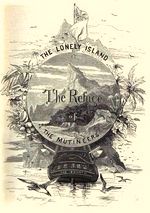
1880 – R.M. Ballantyne's Lonely Island . . . — a fictional history of the first forty years of the Pitcairn's Island community.
Robert Michael Ballantyne The Lonely Island: Or, The Refuge of the Mutineers London: James Nisbet & Co., 1880. Full text. | |
|
A fictionalized history of Pitcairn's Island from its settlement after the mutiny in 1790 until the death of John Adams in 1829. The last four and half pages sketch the island's history from 1829, through the removal of the population to Norfolk Island in 1856, and the subsequent return of some of the Pitcairners to Pitcairn's Island. | ||
|
1881 - Chief Magistrate (Young) and Councillor (Young) to Admiralty enclosing letter to Her Majesty Document no. 85. April 18, 1881. "Chief Magistrate (Young) and Councillor (Young) to Admiralty enclosing letter to Her Majesty". Pages 1468-1469. Full text. | |
|
Letter of thanks from the people of Pitcairn Island to Her Majesty Queen Victoria for the "great favors" she has conferred on her subjects. | ||
|
1881 - Mutineers of the Bounty - Pitcairn Islanders Rosalind A. Young. "The Mutineers of the 'Bounty.' – The Pitcairn Islanders from 1859-80. Scribners Monthly. Vol. 22, No. 1 (May 1881) pp.54-63. Full text. | |
|
A short history of Pitcairn after the return of some of the island's previous inhabitants from Norfolk Island in 1858 and 1863. | ||
|
1882 - Admiralty memoranda regarding letter from Pitcairn Island to Her Majesty Document no. 86. December 1881 to February 1882. "Admiralty memoranda regarding letter from Pitcairn Island to Her Majesty". Pages 1470 to 1479. Full text. | |
|
Before forwarding the Pitcairn Island letter to Her Majesty the Queen, the Admiralty unsuccessfully attempts to determine if Queen Victoria had sent the gift of an organ (or harmonium) to the Pitcairn islanders in 1878 or 1879. | ||
|
1882 - Commander Clark (H.M.S. Sappho) to Rear-Admiral Lyons Document no. 87. Jul 3, 1882. "Commander Clark (H.M.S. Sappho) to Rear-Admiral Lyons." Pages 1481 to 1484. Full text. | |
|
Commander Clark was required to devote much of his time visiting Pitcairn Island attempting to work with the islanders to develop a policy or law disallowing foreigners to settle on the island. He apologizes for a "too darkly coloured" report which documented for the first time the several instances of illegitimate births and their not being recorded in the register of births, deaths and marriages. He was also told of an increase in petty larceny in "late years". | ||
|
1884 - Report of Captain Doughty (H.M.S. Constance) to Rear-Admiral Lyons, including a copy of the Pitcairn Island laws as at 19 March 1884 Document no. 88. March 31, 1884. "Report of Captain Doughty (H.M.S. Constance) to Rear-Admiral Lyons, including a copy of the Pitcairn Island laws as at 19 March 1884". Page 1485. Full text. | |
|
Doughty's report offers a bleak assessment of the Pitcairn Islanders and their life on the island. The issue of "foreigners" settling on the island is noted as a an unresolved problem as is the imbalance of the sexes of marriagable age. He perceives lack of ambition and pride in their environment and day-to-day activities. His suggests the remedy is to have a British "Man-of-Wars man" put in charge to make everything ship-shape! | ||

|
1886 - Declaration by Governments of Great Britain and Germany Document no. 89. April 10, 1886. "Transcript of Declaration by Governments of Great Britain and Germany." Page 1501. Full text. | |
|
| ||
|
1893 - Pitcairn Island Civil Recorder — Laws. Document no. 91. (January 1893) "Pitcairn Island Civil Recorder, Part One: 'Laws' (pp. 1-15)". Pages 1592 to 1594. Full text. | |
|
| ||
|
1893 - Pitcairn Island Laws and Regulations Document no. 92. Laws and Regulations of the Pitcairn Islanders (1893 Laws) – Excerpt from Appendix A of H.L. Shapiro, The Heritage of the Bounty: The Story of Pitcairn Through Six Generations (New York, 1936). Pages 1536 to 1545. Full text. | |
|
| ||
|
1893 - List of Pacific Islands belonging to Great Britain or under British Protection. Document no. 94. December 1893. "List of Pacific Islands belonging to Great Britain or under British Protection", Colonial Office printed paper. Pages 1592 to 1594. Full text. | |
|
| ||
|
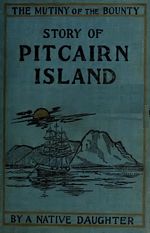
1894 - Rosalind Young's Mutiny of the Bounty Rosalind AmeliaYoung. Mutiny of the Bounty and story of Pitcairn Island, 1790-1894. Mountain View, Cal., [etc.], Pacific press publishing company, [c1894]. 5th ed. xii, 13-266 p. incl. front., illus., plates, ports. 19 cm. Full text. | |
|
The first history of Pitcairn by a native of that island. Miss Young was in the group that returned to Pitcairn Island from Norfolk Island. | ||
|
1897 - Admiralty reports regarding proclamations for Rennell, Bellona and Stewart Islands Document no. 95. 1897. "Admiralty reports regarding proclamations for Rennell, Bellona and Stewart Islands." Pages 1595 to 1609. Full text. | |
|
| ||
|
1897 - Captain Dyke (H.M.S. Comus) — 'Report on Pitcairn Island.' Document no. 96. November 23 1897. "'Report on Pitcairn Island', Captain Dyke (H.M.S Comus)". Pages 1610 to 1613. Full text. | |
|
| ||
|
1898 - Rear-Admiral Bury Palliser (H.M.S. Imperieuse) on Pitcairn Island Document no. 97. April 25, 1898. "Rear-Admiral Bury Palliser to Admiralty". Page 1614. Full text. | |
|
| ||
|
1898 - Doc. 98: H.A. Christian Murder Case Document no. 98. November 10, 1897. "Captain Dyke (H.M.S. Comus) to Admiralty, advising of murders on Pitcairn Island committed by H.A. Christian". Pages 1615 to 1616. Full text. | |
|
| ||
|
1898 - Doc. 99: H.A. Christian Murder Case Document no. 99. January 14, 1898. "Admiralty to Colonial Office, enclosing Captain Dyke's letter regarding H.A. Christian matter". Page 1617. Full text. | |
|
| ||
|
1898 - Doc. 100: H.A. Christian Murder Case Document no. 100. Jan 20, 1898 to Feb 14, 1898. "Colonial Office minutes regarding reports of murders by H.A. Christian". Pages 1618-1629. Full text. | |
|
| ||
|
1898 - Doc. 101: H.A. Christian Murder Case Document no. 101. March 1, 1898. "Extract from records of Island Parliament: "Rules to be observe[sic] by Harry Christian". Pages 1630 to 1633. Full text. | |
|
| ||
|
1898 - Doc. 102: H.A. Christian Murder Case Document no. 102. March 4, 1898. "Law Officers (Attorney-General Richard Webster and Solicitor-General Robert Finlay) to Colonial Office, regarding H.A. Christian case". Pages 1634 - 1635. Full text. | |
|
| ||
|
1898 - Doc. 103: H.A. Christian Murder Case Document no. 103. March 7, 1898 to March 9, 1898. "Colonial Office minutes regarding Law Officers' advice on Harry Christian murder case". Pages 1392 to 1397. Full text. | |
|
| ||
|
1898 - Doc. 104: H.A. Christian Murder Case Document no. 104. March 28, 1898. "Colonial Office to Law Officers regarding draft Instruction to Western Pacific High Commissioner". Pages 1643 to 1645. Full text. | |
|
| ||
|
1898 - Doc. 105: H.A. Christian Murder Case Document no. 105. April 6, 1898 to April 7, 1898. "Colonial Office minutes regarding Instructions to Western Pacific High Commissioner". Pages 1646 to 1647. Full text. | |
|
| ||
|
1898 - Doc. 106: H.A. Christian Murder Case Document no. 106. April 11, 1898. "Draft letter from Colonial Office to Treasury regarding costs of H.A. Christian trial". Pages 1648 to 1653. Full text. | |
|
| ||
|
1898 - Doc. 107: H.A. Christian Murder Case Document no. 107. May 3, 1898. "Draft letter from Secretary of State (Chamberlain) to Western Pacific High Commissioner (O'Brien) enclosing Instructions to bring Pitcairn within the jurisdiction of the Pacific Order in Council". Pages 1654 to 1659. Full text. | |
|
| ||
|
1898 - Doc. 108 H.A. Christian Murder Case Document no. 108. May 4, 1898. "Draft letter from Colonial Office to Admiralty". Pages 1660 to 1667. Full text. | |
|
| ||
|
1898 - Doc. 109: H.A. Christian Murder Case Document no. 109. May 30, 1898. "Admiralty to Colonial Office suggesting visit of a Judicial Commissioner to Pitcairn". Pages 1668 to 1669. Full text. | |
|
| ||
|
1898 - Doc. 110: H.A. Christian Murder Case Document no. 110. May 31, 1898. "Colonial Office minutes regarding proposal to send a Judicial Commissioner to Pitcairn". Pages 1670 to 1675. Full text. | |
|
| ||
|
1898 - Doc. 111: H.A. Christian Murder Case Document no. 111. June 9, 1898. "Draft letter from Colonial Office to Admiralty regarding proposal to send a Judicial Commissioner to Pitcairn". Pages 1676 to 1679. Full text. | |
|
| ||
|
1898 - Doc. 112: H.A. Christian Murder Case Document no. 112. June 22, 1898. "Fiji Royal Gazette: Instructions to High Commissioner, Western Pacific from Secretary of State (Chamberlain)". Page 1681. Full text. | |
|
| ||
|
1898 - Doc. 113: H.A. Christian Murder Case Document no. 113. c.July 1, 1898. "Draft Judicial Commission to Hamilton Hunter". Pages 1682 to 1685. Full text. | |
|
| ||
|
1898 - Doc. 114: H.A. Christian Murder Case Document no. 114. Aug 29, 1898 to Aug 30, 1898. "Copy of Notes of Evidence, Harry Christian murder trial". Pages 1392 to 1397. Full text. | |
|
Summary of witness testimony in the trial of Harry A. Christian. | ||
|
1898 - Doc. 115: H.A. Christian Murder Case Document no. 115. June 14, 1898. "Admiralty to Colonial Office, enclosing "Report on Pitcairn Island" by Captain Dyke (H.M.S. Comus)". Pages 1392 to 1397. Full text. | |
|
| ||
|
1898 - Doc. 116: H.A. Christian Murder Case Document no. 116. June 17, 1898 to June 24, 1898. "Colonial Office minutes regarding report of Captain Dyke". Pages 1726 to 1727. Full text. | |
|
| ||
|
1898 - Report on Pitcairn Island by Commander Torlesse (H.M.S. Royalist) Document no. 117. October 5, 1898. "Report on Pitcairn Island by Commander Torlesse (H.M.S. Royalist) from 'Pitcairn Island: Correspondence relating to the condition of the Pitcairn Islanders.". Pages 1728 to 1729. Full text. | |
|
It was Commander Torlesse's Ship, H.M.S. Royalist, which carried Judicial Commissioner Hamilton Hunter to Pitcairn to conduct the murder trial of Harry Albert Christian. Torlesse notes a deficiency in the Pitcairners' mental and moral condition. He also remarks on the problem of deforestation, the island's difficulty finding a market for its produce, and its general isolation. Indirectly he attributes the personal deficiencies to in-breeding. | ||
|
Selection - Sailing Directions for Pitcairn's Island - 1900 Pacific Islands, Vol. III: Sailing Directions for Tubuai, Cook, and Society Islands; Tuamotu or Low Archipelago; Marquesas; Line Islands or Scattered Islands Near the Equator; Sandwich or Hawaiian Islands, &c. Third Edition. London: Hydrographic Office, Admiralty, 1900. pp.106-110. | |
|
| ||
|
1903 - Extract from report by Commander Umfreville (H.M.S. Shearwater) Document no. 123. February 6, 1903. "Extract from report by Commander Umfreville (H.M.S. 'Shearwater')". Pages 1752 to 1787. Full text. | |
|
Commander Umfreville reports the "moral atmosphere seems quite satisfactory" and notes that communication with the outside world is still a major concern. He recommends that the Consul at Tahiti be given jurisdiction over Pitcairn Island and its neighboring islands. While the High Commissioner for the Western Pacific at Fiji had official responsiblity for Pitcairn since 1898, the British Consul for the Society Islands was called on to deal with the small island more and more. | ||
|
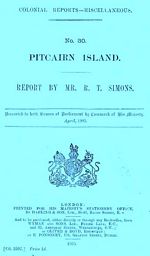
1905 - Pitcairn Island. Report, by Mr. R.T. Simons R. T. Simons. Pitcairn Island. Report, by Mr. R.T. Simons. Presented to both Houses of Parliament by command of His Majesty. April, 1905. His Majesty's Stationery Office, London, 1905 12 p. ; In-8° (Colonial reports. Miscellaneous. No. 30) (Cd. 2397) (also as: Document no. 124. April 1905. "Pitcairn Island, Report by R. T. Simons". Pages 1788 to 1799.) Full text. | |
|
Mr. R. T. Simons was the British Consul at Tahiti and was the chief colonial official with direct responsibility for Pitcairn Island. In his comprehensive report to the High Commissioner for the Western Pacific — his superior — he notes his changes to the government and laws of the island. He is critical of the islanders morals noting "[F]ornication, adultery, illegitimate children, petty thefts, brawls, bad language, etc., are faults among them" and that previous laws and regulations have not been enforced. Abortion "by means of drugs and instruments", he notes as being not that infrequent. Simons attitude is best said in his own words: "I have made provision for the punishment of that, and of other crimes in the future." | ||
|
1904-1915 - 1904 Laws and later additions, from Pitcairn Island Civil Recorder Document no. 125. c. May 19, 1904 - March 15, 1915. "1904 Laws and later additions, from Pitcairn Island Civil Recorder (pp. 80-96)". Pages 1800 to 1833. Full text. | |
|
The laws of Deputy Commissioner R. T. Simons and other that followed as recorded in the Pitcairn Island Civil Recorder. | ||
|
1906 - Bladen on the Settlement of Norfolk Island F. M. Bladen. | |
|
| ||
|
1909 - Captain Lewes (H.M.S. Cambrian) to W.P.H.C. on his visit to Pitcairn Island Document no. 133. July 9, 1909. "Captain Lewes (H.M.S. Cambrian) to W.P.H.C.". Pages 1870 to 1886. Full text. | |
|
Captain Price Vaughan Lewes of H.M.S. Cambrian visited Pitcairn Island on July 9, 1909. He reports the head teacher's view that there is "a great deal of immorality on the inland" and that illegitimate children were common. Land claims and finances associated with the two cutters occupied his attention while on the island. He authorized several new regulations regarding fines, the school, and the prison. | ||

|
1915 - Map of Pacific Ocean Document no. 90. "Undated Map of Pacific Ocean." Page 1502. Full text. | |
|
Map of Pacific Ocean showing whaling grounds with boundaries (?) of the British Western Pacific Territories. Note that Pitcairn Island is not included within either of the two boundaries | ||
|
Stewart's Hand Book for 1919 Allen, Percy S. Stewart's Hand Book of the Pacific Islands: A Reliable Guide to all the Inhabited Islands of the Pacific Ocean . . . . for Traders, Tourists and Settlers. With a Bibliography of Island Works. By. Percy S. Allen. Sydney: McCarron, Steward & Co. Ltd., 1919. pp. 284-286. | |
|
| ||
|
1921 - Report on a Visit to Pitcairn Island, Sir Cecil Rodwell Document no. 160. June 1921. "Report on a Visit to Pitcairn Island, Sir Cecil Rodwell". Pages 1989 to 2005. Full text. | |
|
A quick one-day visit by the highest ranking British official in the Pacific, Sir Cecil Rodwell in June 1921. His report, with annexes for the health and physical condition of the Pitcairners, is addressed to Winston S. Churchill, M.P., and Secretary of State for the Colonies | ||
|
1929 - Report on a Visit to Pitcairn Island, H.G. Pilling Great Britain. Colonial Office. Report on a Visit to Pitcairn Island by H.G. Pilling, Assistant to the High Commissioner for the Western Pacific. London: His Majesty's Stationery Office, 1930. (Colonial no. 53) also: Document no. 169. December 1929. "Report on a Visit to Pitcairn Island, H.G. Pilling". Pages 2019 to 2026. Full text. | |
|
Henry Guy Pilling was Assistant to the High Commissioner for the Western Pacific when he visited Pitcairn Island in late 1929. Pilling "noticed no obvious signs of degeneracy, but the bad condition of their teeth was remarkable" in his one-day visit to Pitcairn. He acknowledged the improvements made in several areas: better housing, a post office, wireless and other improved communications following the opening of the Panama Canal. | ||
|
1929 - The Pitcairn Island register book Lucas, Charles, Sir (ed.) | |
|
| ||
|
1931 – Rutter's Trial of Bounty Mutineers
Owen Rutter. The Court-Martial of the "Bounty" Mutineers edited with an introduction and notes by Owen Rutter, F.R.G.S. Toronto: Canada Law Book Company, 1931, x p., 1 l., 202 p. plates, ports., facsims. 22 cm. Full text. | |
|
Owen Rutter transcribed the official records of the Bounty Mutineers' court-martial trial which was held in 1792. Galloway's text is identical to that published by Rutter in his 1931 publication. | ||
|
1932-36 – Nordhoff and Hall's Bounty Trilogy.
Charles Nordhoff & James Norman Hall. The Bounty Trilogy - Comprising the Three Volumes: Mutiny on the Bounty, Men Against the Sea, & Pitcairn's Island. Illustrations by N. C. Wyeth. Boston: Little, Brown and Company, 1940 Full text. | |
|
"The Bounty Trilogy is a book comprising three novels by Charles Nordhoff and James Norman Hall. It relates events prior to, during and subsequent to the Mutiny on the Bounty. "The three novels, previously published separately, are:—
"The Bounty Trilogy was first published in 1936 by Little, Brown and Company, with a new preface by the authors and included vignette decorations by Henry Pitz. This edition used the plates from the original novels and had 903 pages. "In 1940 a new edition was published by Little, Brown and Company, with illustrations by N C Wyeth. This edition used new plates and because of the use of a smaller font, and smaller margins, and other space saving techniques, the pages in this edition were reduced from 903 pages to 691 pages. Nordhoff and Hall added a paragraph to their preface. The first part of the trilogy is the mutiny. The second part is about the boat voyage of Captain Bligh, and the last part is about the settlement on Pitcairn's Island until the visit of the Topaz, Captain Folger, in 1808. | ||
|
1937 - Her/His Majesty's Ships 1860 - 1937 from the Pitcairn Island Civil Recorder Document no. 79. 1860 - 1937. "Pitcairn Island Civil Recorder, Part Four: 'List of HMS Ships". Pages 1392 to 1397. Full text. | |
|
A list of Royal Navy ships visiting Pitcairn Island from the time of resettlement until 1937. | ||
|
1937 - Pitcairn Island: General Administrative Report by J. S. Neill J. S. Neill and Duncan Cook. Pitcairn Island: General Administrative Report by J. S. Neill; Medical Report by Duncan Cook. "Based on Enquiries Made During 39 Days Residence on the Island Between the 15th May and the 23rd June, 1937." Great Britain. Colonial Office. 1938 (Colonial No. 155.) (also as: Document no. 188. June 1937. "Pitcairn Island General Administrative Report, J. S. Neill(Medical Report by Duncan Cook M.D. omitted)". Pages 2083 to 2133.) 79 pages Selection. | |
|
James Scott Neill, a lawyer and colonial administrator who after concluding his assignment in Tonga as British Agent and Consul, resided on Pitcairn Island for more than a month in 1937. His report was extensive. Neill found the form of Pitcairn government satisfactory, but found it necessary to drew up a new constitution and new laws, procedures and forms for the more efficent operation for its administration. He was an advocate for local control of the school and that Pitcairn should issue its own stamps to raise revenue for the island. | ||
|
1941 - Pitcairn Island: A General Report based on seven months residence in the island during 1940-41 Document no. 204. June 6, 1941. H. E. Maude."Pitcairn Island: A General Report based on seven months residence in the island during 1940-41; with suggestions for the future welfare of the community." Pages 2198 to 2229. Full text. | |
|
Henry Evans Maude, as Deputy Commissioner for the Western Pacific with jurisdiction in the Pitcairn Islands District, reports the result of his assignment "to modernise the government, and to establish a post office and issue stamps in order to generate revenue for the people of the island." Maude's seven month stay enabled him to work with the Pitcairn islanders to work out the new laws and regulations. | ||
|
1953 - J.B. Claydon's Report on Administrative Visit to Pitcairn Island in 1953 Document no. 312. January 30, 1954. "J.B. Claydon. Report on Administrative Visit to Pitcairn Island in 1953". Pages 2585 to 2635. Full text. | |
|
The report includes the many conclusions and recommendations of Colonial administator J.B. Claydon's nearly two month's stay on Pitcairn Island in late 1953 as the personal representative of the High Comissioner for the Western Pacific. He reports on factions on the island in which he was forced to mediate. His actions ranged from dealing with salaries and radio technology to trying to figure out land ownership issues. | ||
|
1864 – 1963 - Ruler and Chief Magistrates of Pitcairn Island Document no. 93. 1864 - 1963. "Pitcairn Island Civil Recorder, Part Two: 'Rulers of Pitcairn Island' and 'Chief Magistrates etc.' Pages 1546 to 1591. Full text. | |
|
| ||
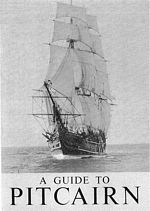
|
1963 - Guide to Pitcairn South Pacific Commission. Literature Bureau. A Guide to Pitcairn Suva, Fiji: South Pacific Office, 1963. or Great Britain. Privy Council. Judicial Committee. Privy Council Record. (Document no. 400.) "A Guide to Pitcairn." (1st edition, 1963) August 1, 1963. Pages 2961 to 3001. Full text. | |
|
"Published for the Government of the Islands of Pitcairn, Henderson, Ducie and Oeno by the South Pacific Office, Suva." | ||

Pages from James R. Galloway's Fateful Voyage website. |

Pages from James R. Galloway's Fateful Voyage – Pitcairn website. |

John Hagan's Bounty Chronicles. |
|
Last updated by Tom Tyler, Denver, CO, USA, Oct 24, 2025
|